Buying a home in Spain as an American

Buying a home in Spain as an American offers a favourable alternative to the challenges currently faced in the United States real estate market. In the US, first-time homebuyers are grappling with historically low affordability due to high mortgage rates, hovering around 7.5%, driven by Federal Reserve actions against inflation.

The past few years have seen a significant surge in American interest in the Spanish property market, reinforcing the growing relevance of U.S. investors. For many, buying a home in Spain as an American has moved from a dream to a strategic reality, fueled by favorable exchange rates and a high quality of life. While earlier reports pointed to an 88% increase in U.S. buyers between 2019 and 2022, more recent data shows an even stronger and more sustained trend. According to Spanish notary figures and real estate market reports, the number of American buyers in Spain has quadrupled between 2018 and 2023, placing Americans among the fastest-growing foreign buyer groups in the country.

By early 2023, U.S. citizens were purchasing over 1,300 homes every six months in Spain, compared to just 192 purchases in the first half of 2007—representing a tenfold increase over 15 years. Although this growth began from a relatively small base, it now reflects a solid and well-established presence of Americans in Spanish real estate.

Americans are also clearly positioned at the top end of the market. In 2024, they paid an average of €3,390 per square meter, the highest price paid by any foreign nationality and around 30% more than British buyers, who remain the largest group by transaction volume. This trend highlights a strong focus on prime and luxury properties and confirms that many American buyers view Spanish real estate as a long-term, value-driven investment.

The Spanish real estate market for Americans

Spain’s real estate market has shown strong resilience despite global economic uncertainties. Since the 2008 financial crisis, which severely impacted property values across Europe, Spain has recovered steadily. This recovery has been aided by careful regulatory measures, improved economic conditions and consistent demand from both local and international buyers.

Property prices in Spain have been increasing moderately, varying by region and local market conditions as it is explained in our article WHY ARE COSTA DEL SOL PROPERTIES UN SUCH HIGH DEMAND. Unlike the rapid inflation and speculative bubbles seen before the crisis, today’s price growth is more gradual. This suggests a healthier market environment less prone to sudden downturns.

Stable mortgage rates in Spain have also played a crucial role in maintaining affordability. Unlike other markets where high interest rates can make borrowing expensive, Spain’s stable rates have made property ownership more accessible.

Looking ahead, economic forecasts predict continued growth in Spain’s real estate sector. Factors such as steady economic expansion, growing consumer confidence and ongoing infrastructure improvements contribute to a positive outlook for property values and rental income. The country offers a stable and promising market environment supported by economic stability, appealing lifestyle factors and government initiatives aimed at attracting international investors. These factors make Spain an attractive option for long-term investment for American buyers.

Current market trends

According to BBVA Research, prices are expected to stabilise with moderate increases in major cities like Madrid, Barcelona and Malaga, while smaller markets may see minor adjustments. The Euribor, a key interest rate for mortgages, is predicted to stabilise around 2.6% by late 2024, down from its peak in September 2023. This could lower financing costs, potentially boosting mortgage approvals and rebuilding market confidence. Demographic factors such as ageing populations, birth rates, tourism and migration patterns play a significant role in housing demand. Urban expansion and infrastructure improvements are also enhancing property values in key areas. The market is evolving with a focus on sustainability, energy efficiency and digitalization, as more people prefer environmentally friendly homes despite higher building expenses. Rental properties remain a solid investment option despite rising prices, offering stable income and resilience to economic changes.

Popular regions among American buyers

Spain remains highly attractive to a wide range of American expats, including digital nomads, remote workers, retirees, and property investors. The country offers a compelling combination of natural beauty, reliable high-speed internet, and attractive incentives such as the digital nomad visa, with specialized digital nomad visa services playing a key role in facilitating a smooth and compliant relocation to Spain.

Many Americans moving to Spain come from states with large Spanish-speaking populations, such as California, Texas, and Florida, attracted by similarities in climate, lifestyle, and cultural ties. For those looking to establish permanent roots, buying a home in Spain as an American has become a preferred way to secure a long-term foothold in Europe. Major cities like Madrid continue to be the top choice for Americans due to strong employment opportunities and high-quality amenities, followed closely by Barcelona, where there is a growing trend of moving to Barcelona from the USA. Other popular destinations include Andalusia—specifically the Costa del Sol—the Valencian Community, and the Balearic Islands, where the luxury real estate market is increasingly driven by U.S. demand

MOVING TO MALAGA in Andalucía is a top destination as it stands out with its abundant sunshine, beach lifestyle and affordable yet modern amenities. The region’s appeal is further enhanced by direct flights connecting it to major US cities and a vibrant cultural scene.

Average property prices and comparison with USA

According to Numbeo, in Spain, rental prices vary significantly compared to the United States. For a one-bedroom apartment in the city centre, the average rent is approximately €964.59 (equivalent to $1,031.39) which is 70.3% higher than in Spain, while outside the centre, it’s a staggering 86% higher. Purchasing property also shows notable differences: the price per square metre for an apartment in the city centre averages €3,574.27 ($3,821.79) in Spain, compared to €3,092.87 ($3,307.05) in the United States, though prices outside the centre are higher in the US. When it comes to salaries, the average monthly net salary after tax in Spain is €1,717.52 ($1,836.46), much lower than the US average of €4,233.80 ($4,526.99). Additionally, mortgage interest rates in the US are notably higher at 6.57% compared to Spain’s 3.54%, making financing more expensive for homebuyers in America.

With salaries averaging 140% higher than their Spanish counterparts, Americans, boosted by a robust dollar and lower property prices compared to domestic rates, wield significantly greater purchasing power in Spain.

We strongly recommend hiring a Spanish real estate attorneys to conduct comprehensive legal due diligence before buying property in Spain as a foreigner. This helps minimize the potential risks associated with the transaction.

Essential legal checks:

Property Registration: Verify that the property is correctly listed in the Property Registry, including confirming its description and boundaries through a Spanish Nota Simple.

Liens and Taxes: Ensure the property is free of any liens or mortgages and is fully compliant with all tax obligations.

Occupancy Status: Confirm that the property is not currently occupied.

Urban Planning ( Property Condition Survey) : Ensure an architect thoroughly examines all urban planning documents and permits. This is especially important for properties situated on rustic land in Andalusia, where obtaining specific certificates such as SWOT or AFO may be necessary to ensure the property complies with regulations for rural areas.

Property Taxes: Check that property taxes (IBI) are current and there are no outstanding balances.

Utilities: Verify that all utility accounts are correctly registered and that payments for the previous year have been settled.

Community Debts: Investigate any existing debts with the property owners’ community.

José María Oliva
Author:
-Spanish and English Solicitor-

As a Spanish real estate attorney with extensive experience in international property transactions, I am committed to preventing disputes through strategic, well-planned closing procedures. My focus is on ensuring secure and legally compliant acquisitions for U.S. investors by providing thorough due diligence and expert legal guidance. Read more

Mortgage options for Americans in Spain

Visa and residency considerations

Once you have decided to settle in Spain, the first step is to research the different types of visas and residence permits, which depends on the reason of your move to Spain, for example, if you are going to work as an employee, you will need a work visa, or if you move because you have retired and want to settle here without the need to work, you will need to apply for a Non-Lucrative Residence Visa.

To obtain a visa or residence permit in Spain, it is not necessary to acquire property; In most cases, renting a home is usually enough. However, it is interesting to explore the opportunities that property investing in Spain can offer a US citizen.

Necessary documentation

To apply for any visa, the following criteria must be met:

Must be at least 18 years old.

Must not have an irregular status within Spain.

Must not have a criminal record under Spanish law.

Must provide the relevant property ownership certificates for any acquired properties.

Must pay the applicable visa processing fees.

Must have public or private health insurance with a provider authorized to operate in Spain.

Must demonstrate adequate financial resources to support oneself and any family members during the stay in Spain.

In general, American applicants need to provide the following documentation to obtain any visa:

  • Visa Application Form and Fee: Complete the application form and pay the associated fee.
  • Photographs: Submit two recent color passport-sized photos with a white background.
  • Travel Documents: Provide a valid passport or other travel document recognized by Spain, with at least one year of validity remaining. Include photocopies of all pages showing the holder’s details, stamps, and visas.
  • Criminal Record Certificate: Supply certificates of criminal records from all countries of residence over the past five years, translated into Spanish and properly legalized.
  • Spanish Tax Identification Number (NIE) for foreigners: Both the applicant and any accompanying family members must possess an NIE.
  • Proof of Financial Means: Demonstrate sufficient financial resources to support yourself and any family members for at least one year while residing in Spain.
  • Medical Insurance Contract: Provide a contract with a medical insurance provider in Spain covering all healthcare risks for the applicant and dependents without co-payment. Our attorneys can assist in obtaining appropriate private insurance for this purpose.

For more on relocating, see our Moving to Spain from the USA guide

Do you need a professional help for buying a home in Spain as an American?

Legal professionals

Our real estate and tax attorneys provide specialized legal services tailored specifically for American expatriates. Our expertise spans critical areas, including secure property transactions, residency visas, and comprehensive tax advisory. Given the complexities of international law, we assist U.S. taxpayers with the Spain-USA Tax Treaty and 401(k) implications to prevent double taxation. We emphasize the necessity of a thorough tax planning assessment before relocating, ensuring well-informed decision-making for a seamless transition from the USA to Spain. Whether navigating IRS reporting requirements or Spanish tax residency, our team ensures your move is legally sound and financially optimized.

Taxes and fees

At our Law Firm we work with US citizens, now more than ever since Malaga Airport has direct flights to New York. Our due diligence determines in advance the tax cost of buying property in Spain. Taxes are unavoidable and should not be ignored.

In 2026, the cost of buying a house in Spain varies depending on whether the property is new or a resale. Total expenses, including taxes and fees, typically range from 10% to 13% of the property’s purchase price.

Common Costs

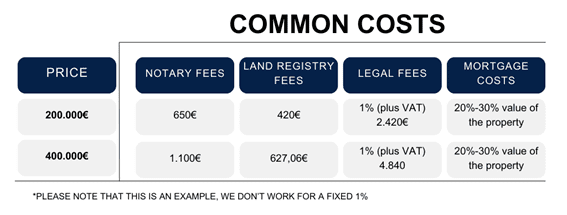
  1. Spanish Notary Fees: Paid by the buyer, varying with property value and deed length. For a €200,000 house, fees are around €650, and for a €400,000 house, about €1,100.
  2. Land Registry Office: Registers the property in the buyer’s name. Fees for a €200,000 property are around €420, increasing with property value.
  3. Legal Fees: Typically, 1% of the purchase price plus VAT. At Tejasa Solicitors Law Firm fees depend on the complexity of the transaction and the case workload.
  4. Mortgage Costs: If applicable, include appraisal, notary and registry fees, along with a deposit of about 20% to 30% of the property’s value.
Common Costs

Costs for New Properties

  • VAT (Value Added Tax): 10% on new properties, or 6.5% in the Canary Islands.
  • Stamp Duty (AJD): Varies by Autonomous Community from 0.50% to 2.00%.

Costs for Resale Homes

  • Property Transfer Tax (ITP): Ranges from 6.00% to 13.00% depending on the region.
  • Banking Costs: Includes fees for opening a Spanish bank account and international money transfers.

Additional Considerations

  • Municipal Capital Gains (Plusvalía Municipal): Paid if the seller is a non-resident; otherwise, the seller is responsible.
  • Income Tax for Non-Residents: Requires withholding 3% of the purchase price if the seller is not a resident.

Ongoing Costs

  • Local Rates (IBI): Annual property tax based on the cadastral value.
  • Community Fees: Applicable to properties in urbanizations or buildings.
  • Utilities and Insurance: Includes rubbish collection, water, electricity, internet, and optional home insurance.

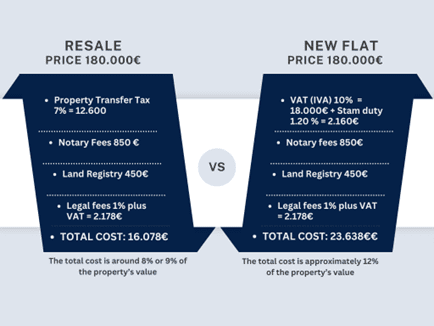
For instance, the initial costs of purchasing a resale apartment in Nerja for €180,000 involves Property Transfer Tax (ITP) of 7%, totaling €12,600, notary fees of approximately €850, land registry fees around €450 and legal fees estimated at 1% of the purchase price plus VAT, which amounts to about €2,178.

On the other hand, buying a new flat in Marbella for €180,000 comes with different costs. You would incur VAT (IVA) at 10%, amounting to €18,000 and Stamp Duty (AJD) at 1.20%, totaling €2,160. Notary fees are roughly €850, land registry fees about €450 and legal fees estimated at 1% of the purchase price plus VAT, around €2,181.

Steps to buying property in Spain as an American in 2026

As an American citizen, buying property in Spain involves several key steps, beginning with making an offer. Once you find the ideal home, you’ll need to propose a price. Property owners are generally open to offers but expect them to be serious and reflect market conditions, the property’s condition, and whether you’re buying with cash. Consult with your real estate agent to navigate the negotiation process effectively.

After your offer is accepted, the closing services process begins. Here’s what you should do:

Hire an Attorney: Secure a lawyer before committing any deposit or signing documents. Your lawyer will conduct essential legal checks on the property.

New flat vs resale

Sign the purchase contract: This contract confirms your intention to buy and outlines the terms and conditions of the transaction, including deadlines. Both buyer and seller (or their representatives) typically sign the contract, with the buyer paying around 10% of the purchase price. If the property includes fixtures, fittings, or furniture, ensure the contract lists these items, signed by both parties.

Apply for a mortgage: If you need financing, start the mortgage application process now. Consider the approval time as your bank has advised.

During this phase, your property lawyer will conduct a detailed review to ensure the property’s legality. Their checks include:

Property Registry Verification: Confirming that the property details match the legal owner and identifying any potential charges or encumbrances.

Tenant Verification: Ensuring no tenants are occupying the property.

Planning Permission Validation: Checking that the property was built with the proper licenses and permissions. For off-plan properties, verify that the developer has all the necessary documentation.

Tax Assessment: Ensuring that the current owners are up-to-date with property-related taxes.

Community Payments: Confirming that there are no outstanding community payments for the property.

The completion process begins once the purchase contract is signed – usually within two to eight weeks. This involves finalizing the transaction at the Notary Public, where your lawyer will review the deeds, provide a verbal translation if needed, and oversee the completion. Payment is typically made using a banker’s draft.

At the time of completion, you’ll receive the keys to your new home. Your lawyer will handle the property registration at the Property Registry, manage tax and fee payments, arrange utility connections or transfers, and set up direct debit payments with your bank.

Our legal experts conduct rigorous due diligence, thoroughly examining all legal aspects of the property. After completing our legal review, we provide our clients with a detailed legal report covering all key areas

Do you need a professional help for buying a home in Spain as an American?

Property search and viewing

Real estate portals serve as virtual showcases where properties for sale are advertised, allowing buyers to find and compare available properties in their desired areas efficiently.
The top websites for finding houses for sale in Spain are:

  1. Idealista.com: Leading the market with a vast selection of properties available in multiple languages, supported by extensive market insights. More than 50M users a year.
  2. Fotocasa.com: Offers a broad range of properties and features user-friendly tools like interactive maps and virtual tours.
  3. Habitaclia.com: Specialises in Mediterranean regions such as Catalonia and the Balearic Islands, ranking highly in search engines.
  4. Pisos.com: Features a versatile app for searching apartments, houses and commercial spaces across Spain, with detailed filters and notifications.
  5. YaEncontre.com: Known for its user-friendly design, multilingual support and unique search tools such as drawing search zones on a map.
  6. TuCasa.com: Based in Andalusia, offering a wide array of properties across Spain, though available only in Spanish.
  7. Kyero.com: Provides extensive support for foreign buyers with guides, podcasts, market data and affordability calculators, specializing in navigating the Spanish property market.
  8. Indomio.es: Features a mortgage comparison tool and boasts over 1 million property listings, attracting millions of monthly visitors.
  9. Trovimap.com: Offers a valuation tool and a comprehensive selection of properties nationwide, aiding in understanding market dynamics.

In the context of purchasing property in Spain, while it’s generally recommended to visit in person before finalising a transaction, virtual viewings serve as an excellent initial step to examine each room from multiple angles, gaining insights into the space, ambiance and overall condition of the property.They provide sufficient information for buyers to narrow down their choices efficiently and decide which properties warrant a physical inspection.

Making an offer

The extent of price reduction from the original asking price for a house can vary significantly, influenced by factors such as the duration the property has been listed, its initial pricing accuracy, and the specific location within a region. When buying a home in Spain as an American, understanding these local negotiation margins is essential to securing a fair deal and avoiding overpayment. . According to feedback from Spainguru’s Facebook group members, reductions typically range from 3% to 17%, though some properties see no reduction at all. Conducting thorough research and assessing all relevant variables is crucial before submitting an offer on any property. Additionally, Idealista reports a national average price reduction of 18.8% from the initial asking price. According to Fotocasa’s survey, two out of three sellers agree to a price reduction ranging from 7% to 10%. However, such negotiations primarily apply to resale properties, as new construction prices are generally fixed.

Before entering negotiations, buyers should thoroughly research the local market and understand the specific property they intend to purchase. Preparation is key to successful negotiation. Key strategies include analysing market comparables, setting a budget that considers financing and additional costs, assessing the property’s condition, verifying its legal status through a property registry search and approaching negotiations with empathy towards the seller’s emotional attachment to the property. The negotiating power can vary greatly depending on the geographic location. In high-demand urban and coastal areas, sellers typically hold a stronger position, whereas negotiations are often more flexible in low-demand regions such as rural or suburban areas.

Once a price is agreed upon verbally, it’s prudent to document this agreement in writing, detailing the price without binding either party legally to the purchase. Following price negotiations, attention shifts to negotiating terms within the purchase contract. This includes establishing a timeframe for completion, ensuring it aligns with your logistical needs such as financial arrangements and travel plans. Additional negotiations might involve clarifying what is included in the sale, such as fixtures and fittings and addressing any legal issues uncovered during due diligence.

Securing financing

When purchasing real estate in Spain, traditional U.S. mortgages are typically unavailable. U.S citizens seeking mortgages in Spain face several requirements and challenges. Read on our article BEST BANK ACCOUNT IN SPAIN FOR EXPATS to navigate the spanish bank options. Spanish banks typically lend 60%-70% of a property’s price, necessitating buyers to cover the remaining 30%-40% plus around 10% for taxes and fees, which can be a substantial financial burden. Applicants must demonstrate consistent income and ensure less than 40% is spent on managing obligations like loans and mortgages to improve their chances of qualifying. While the legal age to obtain a mortgage in Spain is 18, most banks prefer applicants to be at least 25, provided they can prove solvency. Additionally, a high credit score, ranging from 300 to 850, increases the likelihood of mortgage approval, with scores of 800 and above being particularly favourable, though not a guarantee.

Other alternative financing methods include paying cash, securing developer financing, using a self-directed IRA or obtaining a reverse mortgage

Do you need a professional help for buying a home in Spain as an American?

buying a property in Nerja

Tips for a successful property purchase in Spain

If you’re thinking about purchasing a property in Spain, conduct thorough research on work permits, visas and the complexities of taxes. Understand that, as a U.S. citizen, you must file U.S. taxes annually while paying taxes in Spain, so consulting with tax professionals familiar with both systems is advisable. Consider a trial stay to experience daily life and plan your finances carefully, accounting for utilities, services, maintenance and insurance. Explore financing options early and compare mortgage terms from Spanish banks. Visit the property in person before making a final decision to inspect it yourself. Conduct thorough due diligence on the property’s legal status, ownership history and any potential issues or liabilities.

Properly end your state residency to avoid state taxes, especially in states like Virginia, California and South Carolina, where it is not straight forward. Maintain a U.S. bank account as well as open a Spanish one. To ensure a smooth transition, research the culture, norms, history and geography of Spain, be patient with the adjustment period and be open to new experiences and cultural differences. Make local friends to integrate and gain deeper insights, while keeping in touch with loved ones back home.

Do you need a professional help for buying a home in Spain as an American?

How can I find reliable real estate agents and attorneys in Spain?

To find reliable real estate agents and attorneys in Spain, it’s essential to prioritise experience and expertise. A trustworthy service with a strong grasp of the local market /laws where you intend to purchase property, backed by a proven track record and positive client testimonials. Effective communication and negotiation skills are crucial attributes to secure favourable deals. Transparency regarding fees and terms is non-negotiable, ensuring clarity throughout the transaction process

Cultural considerations

Understanding Spanish cultural considerations is essential for U.S. citizens moving to Spain. Adapting to local customs such as the siesta, late meal times and relaxed punctuality can ease integration. Appreciating regional differences, participating in local festivities, recognizing the importance of communal family meals, informal queuing systems and expressive communication style can help U.S. citizens navigate everyday interactions smoothly. Embracing these cultural differences not only shows respect for Spanish traditions but also enriches the overall experience of living in Spain.

Buying process 

At Tejada Solicitors, our goal is to guide you effortlessly through every stage of the buying and selling process, keeping you informed and minimizing any stress or concerns.

We aim to ensure the buying and selling experience is as smooth and enjoyable as possible.

We provide expert representation throughout every stage of the real estate closing process.

We offer a complimentary initial consultation, ideally conducted via video conference or face-to-face, depending on your location and urgency. A face-to-face meeting is crucial for building trust and allowing you to meet the team who will support you through this significant decision: buying property in a foreign country. During this initial meeting, we outline the steps involved in the buying process and the services we offer.

Americans buying property in Spain 2

To ensure transparency, we provide an estimated breakdown of all costs associated with the buying process after the initial meeting. We believe it’s important for you to understand the full budget from the start to manage your expenses effectively. Sometimes, clients come across cheaper offers from other companies that exclude certain expenses to capture interest. Be sure to carefully review all cost details to avoid falling into these traps.

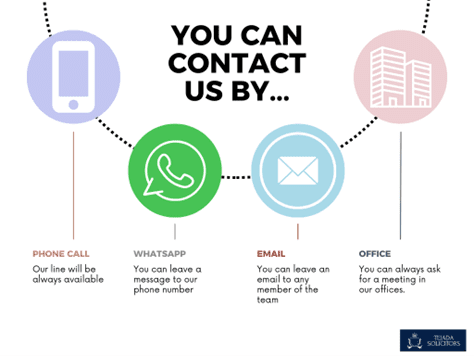
We communicate openly and regularly with our clients through various channels, including video calls, email, phone, WhatsApp, and in-person meetings. You can choose the communication method that suits you best.

Before the sales contract is finalized, we provide you with a comprehensive property report detailing all legal information about the property. This report highlights the property’s features and any documentary anomalies found.

Our real estate attorneys drafts the sales contract in Spanish and English. The contract details all agreed terms with the seller, focusing on safeguarding your interests throughout the buying process. Once the contract is agreed upon with the seller’s lawyer, we will send it to you for review and approval. Our attorneys will not sign any document or proceed with any action without your explicit authorization.

Our lawyer will accompany you to the notary to sign the deed on completion day. We organize everything well in advance to ensure a seamless completion. If you prefer, we can handle the signing on your behalf through a Power of Attorney (POA).

You can contact with tejada solicitors

At Tejada Solicitors, we understand that for our American clients, choosing a Spanish attorney is a matter of trust. Although ‘Solicitor’ is our traditional title, we operate as a full-service boutique law firm designed to meet the specific needs of U.S. buyers, providing comprehensive legal and architectural oversight. .

Do you need a professional help for buying a home in Spain as an American?

 Post-purchase considerations

At Tejada Solicitors, our English speaking lawyers in Malaga assist U.S. investors and expatriates with property purchases in Malaga, Granada and across southern Spain. Our legal and tax support continues after completion, helping new property owners understand and meet their ongoing obligations in Spain, including:

  • IBI. Property Tax is a municipal tax paid annually.
  • Non Resident Tax, this state tax that accrues annually
  • Rental Income Tax, if you decide to rent your home in Spain you will have to pay this tax. If you want to know more about this tax, we recommend reading our article on Renting out a property in Spain as a landlord
  • Urban property registration
  • Local taxes such as garbage collection fees and driveway access tax
  • Building permit application to renovate your home.
  • Will in Spain
  • Inheritance tax in Spain
  • Selling your property in SpainThe complexities of tax, immigration and real estate matters in Spain can be daunting for foreigners if they lack proper guidance. Tejada Solicitors takes a comprehensive 360-degree approach to your case. Our team of lawyers and advisors which include experts in real estate transactions, tax law and immigration, all collaborate to thoroughly evaluate and analyse your particular situation.

Our goal is to simplify this process, relieve stress and ensure a successful move to Spain. Trust our Law Firm, with extensive experience in managing these arduous procedures.

Property registration

Once you have signed the public deed that transfers the property to your name, the next step is to present this deed to the Property Registry. This procedure is essential for registering your name as the legal owner of the property. Registration not only validates your property, but will also allow you to set up services such as water, electricity, internet and others in your name, as well as register with the municipal registry.

Utilities and services

According to Numbeo, in Spain, monthly utilities for an 85m2 apartment, including basic services such as electricity, heating, cooling, water and garbage, are 43.0% cheaper than in the United States. Mobile phone plans with calls and 10GB+ data are 174.2% cheaper and high-speed internet (60 Mbps or more, unlimited data) is 106.4% pricier in the United States, compared to Spain.
For property owners without existing connections, multiple provider options are available, though setup can be time-consuming. Conversely, if utilities are already connected, the process is streamlined but requires initiating a contract with the provider. In certain areas, only one provider may be accessible. You can read more about  HOW TO SET UP  UTILITIES IN SPAIN for a full guide of the process.Payments are typically handled through automated bank transfers, requiring a Spanish bank account. Water billing is structured by consumption bands, varying regionally, while electricity and gas setups involve detailed processes including CUPS codes and specific documentation.

Community integration

Community integration for US citizens moving to Spain involves understanding and adapting to local norms, fostering relationships and participating in communal activities. It starts with familiarising with the Spanish culture, including language and customs. Engaging in local events, such as festivals and community gatherings, joining clubs, sports teams or volunteering and a willingness to embrace and contribute to the vibrant local culture and community life.

Maintenance and insurance

Community fees in Spain are essential contributions made by property owners towards the maintenance and enhancement of shared amenities within residential complexes. These fees include services like electricity and water bills, cleaning of communal areas, professional services like concierge and gardeners, maintenance of lifts and insurance for communal elements. Each year, communities of owners must disclose detailed financial accounts, accessible to all owners. The amount payable can vary significantly based on factors such as the property’s square meterage (which determines one’s share of communal elements) and the level of services provided. Decisions regarding fee adjustments are typically agreed upon annually at the meeting, with payment frequencies varying from monthly to bi-annually. Additional charges may arise for unforeseen maintenance or upgrades, managed separately from regular fees. Non-payment of community fees can result in legal actions including property foreclosure or even forced auction to settle outstanding debts, underscoring the importance of timely payment and financial transparency within these residential communities.

Home insurance isn’t mandatory, unless you require a mortgage. Its coverage and premiums depend on property size, location and usage

PROUD TO BE A MEMBER:
British Chamber of commerce in Spain
tejada solicitors team law firm malaga

“The only way to do great work is to love what  you do.”

– Steve Jobs –

Contact Form

Terms and conditions - Data protection acceptance
Newsletter suscribe

FAQ’s

In Spain, purchasing a home involves several costs, regardless of whether you are a Spanish or American citizen. These expenses include the Property Transfer Tax (ITP) or VAT, depending on whether the property is a resale or a new purchase, the Municipal Capital Gain Tax for the increase in land value, the notary and the land registers fees. Additionally, administrative management fees must be considered. These costs should be included in your total budget for the purchase.

Yes, it is possible to apply for a mortgage, but it is important to keep in mind that, as non-residents, additional requirements will apply and the conditions will be more restrictive compared to those offered to Spanish citizens.

It is not necessary to be a tax resident in Spain to buy a home. You only need a valid passport, a NIE (Foreign Identification Number) and a bank account in Spain to pay taxes and arrange direct debits for services related to the property. We always recommend opening the account at least one month before signing the deed.

At Tejada Solicitor, we can assist you in obtaining the NIE and opening the bank account through a power of attorney, simplifying the purchase process

When purchasing a property in Spain as a foreigner, these will be the crucial steps to follow, with the guidance of expert lawyers throughout the entire procedure:

  • Make and confirm your offer.
  • Formalise the reservation agreement.
  • Due diligence phase: Obtain a detailed legal report prepared by expert lawyers, guaranteeing clarity and transparency.
  • Sign of the private purchase and sale contract
  • Complete payment of the property, sign the public deed and receive the keys.

No. U.S. citizens have the same legal rights as any other foreign buyer in Spain, and there are no specific restrictions or additional taxes imposed solely on the basis of nationality. American buyers follow the standard property purchase process and are subject to the same acquisition taxes as Spanish buyers.

The only differences arise if the buyer intends to live in Spain, which may require the appropriate immigration status, such as a Non-Lucrative Visa, a Digital Nomad Visa, or another form of legal residence, depending on personal circumstances. In addition, U.S. citizens who become tax residents in Spain must comply with ongoing Spanish tax obligations.

From a tax perspective, it is also essential to apply the Spain–U.S. Double Taxation Treaty, which governs how income and assets are taxed to avoid double taxation. For a detailed explanation of the tax implications for Americans living in Spain, we recommend reading our dedicated guide on American Tax Services in Spain

American citizens living in Spain have several healthcare options depending on their status and visa type:

Health Insurance Requirements for US Citizens:
ecuring private health insurance is a mandatory requirement for most Spanish residency visas. While coverage in Spain is significantly more affordable than in the U.S.—with comprehensive plans starting as low as €150/month—it must meet strict legal criteria. To ensure your visa approval, the policy must provide full coverage throughout Spain with absolutely no deductibles and no co-pays. Additionally, the plan must be issued by an insurance provider officially authorized to operate within Spain. At Tejada Solicitors, we guide you in selecting a policy that fulfills these specific mandates to avoid any delays in your application

Public healthcare: Available to those who work in Spain and contribute to the Spanish Social Security system.

Convenio Especial: An option for residents without employment.

Digital Nomads: Currently must contribute to Spanish Social Security, as the U.S. does not issue the required USA/E1 form. A new agreement is pending ratification.

Emergency care: Guaranteed to everyone, but may incur costs if you lack proper coverage.

Spain offers high-quality, affordable, and accessible healthcare for American expats.

While hiring an attorney is not a legal requirement in Spain, it is highly recommended for US buyers. The Spanish real estate process differs significantly from the US model. In Spain, we do not use title insurance companies in the same way, and the roles of escrow and the Notary function differently.

A local real estate attorney performs the essential “Due Diligence” to ensure the property is free of any hidden debts or liens and fully complies with local zoning laws and permits.

Tejada Solicitors
Privacy Overview

This website uses cookies so that we can provide you with the best user experience possible. Cookie information is stored in your browser and performs functions such as recognising you when you return to our website and helping our team to understand which sections of the website you find most interesting and useful. You can read about the Cookies or our Privacy Policy